
Most portfolio monitoring reports the past. Powdr reads the forecast.
Powdr doesn’t ask your borrowers and portfolio companies for a report. It reads the three-statement models they already maintain — and turns them into live exposure, covenant and returns analysis across your whole book. Ten reasons institutions choose it, and what sits behind each one.
The ten reasons
Every claim on this page is traceable to shipped code. Where something needs qualifying, the qualification is on the page rather than in a footnote.
See the breach before it happens
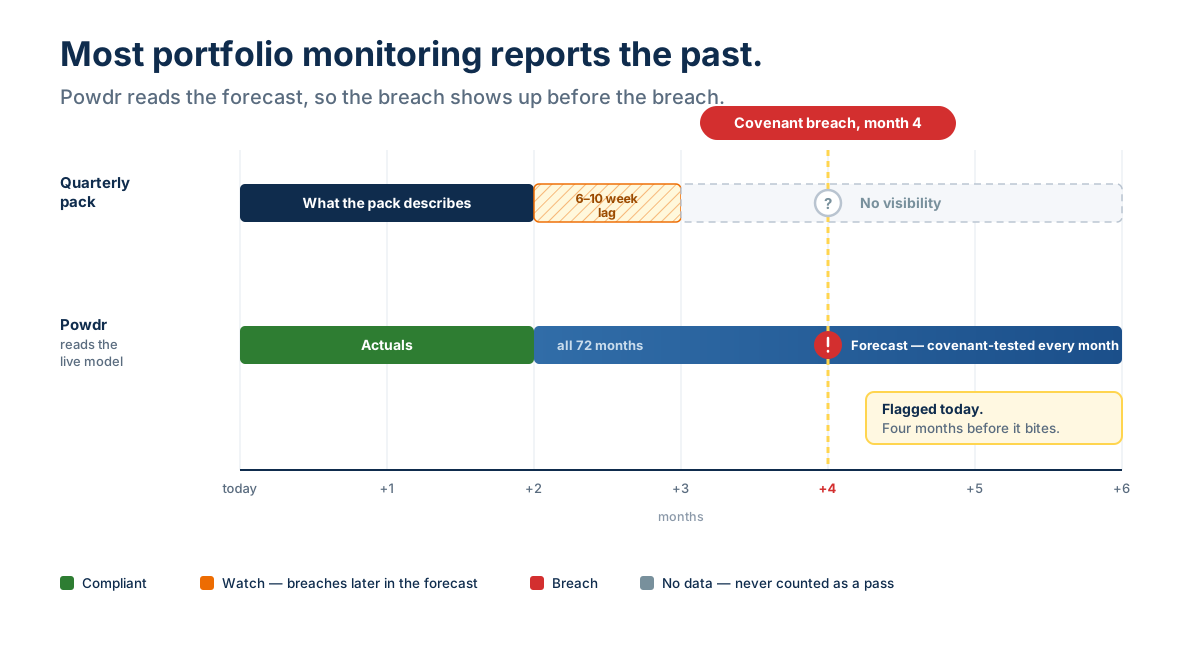
Covenants tested against every month of the forecast, with the breach month named.
02The whole book, worst case first
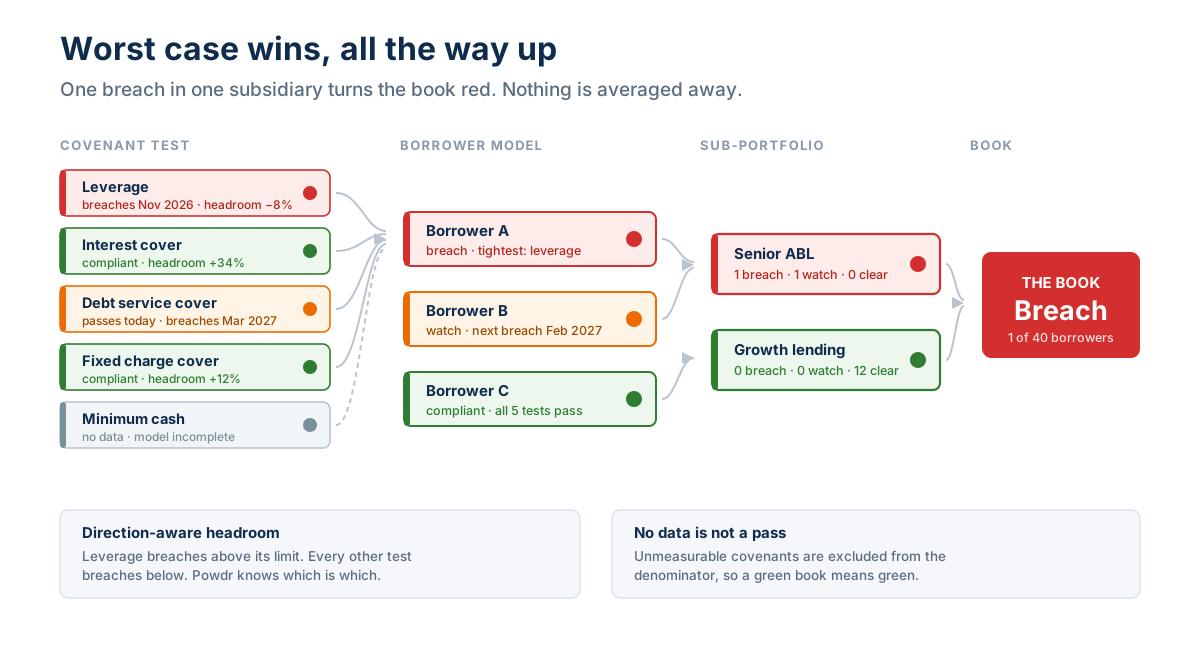
Compliance rolls up covenant to model to sub-portfolio to book. Nothing averaged away.
03Every number shows its working
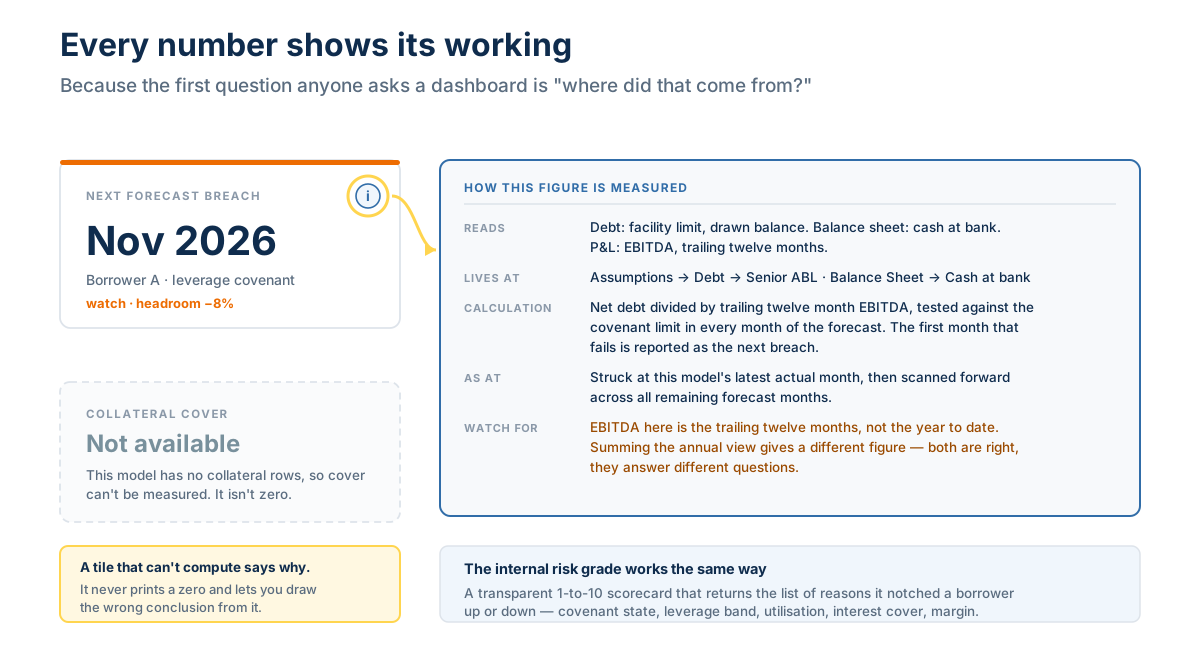
Click any figure for the rows it reads, the arithmetic, and the month it’s struck at.
04ABL modelled the way you lend
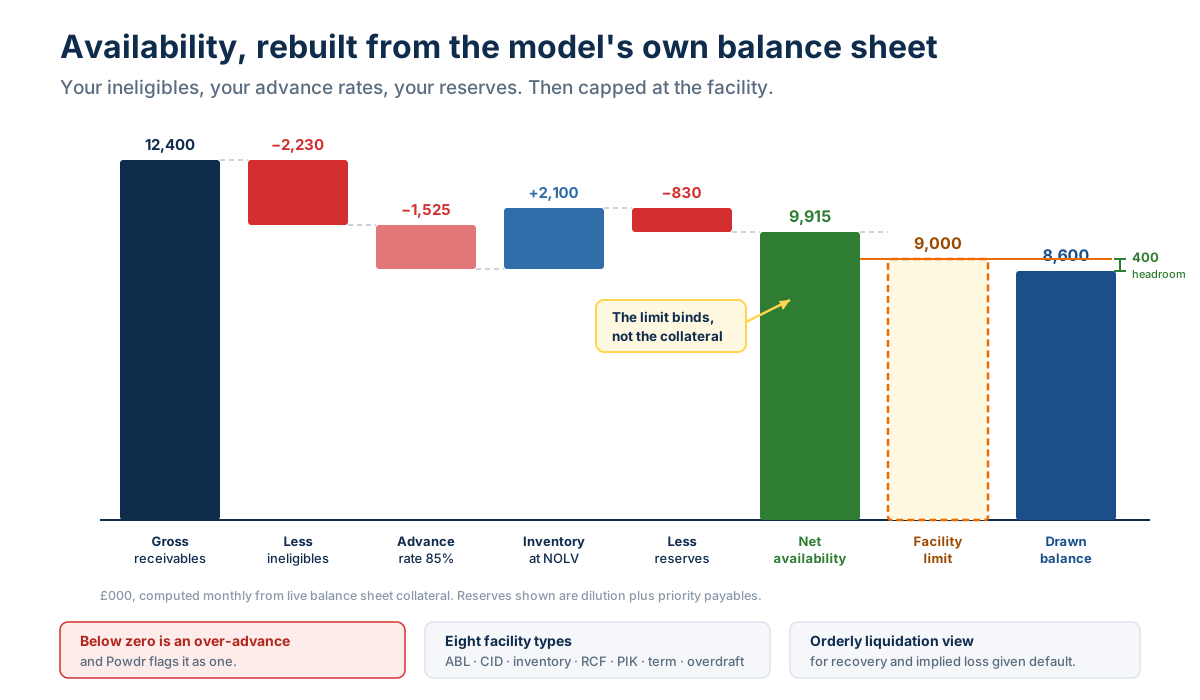
Borrowing base rebuilt from live collateral, capped at facility, over-advance flagged.
05Returns maths that holds up
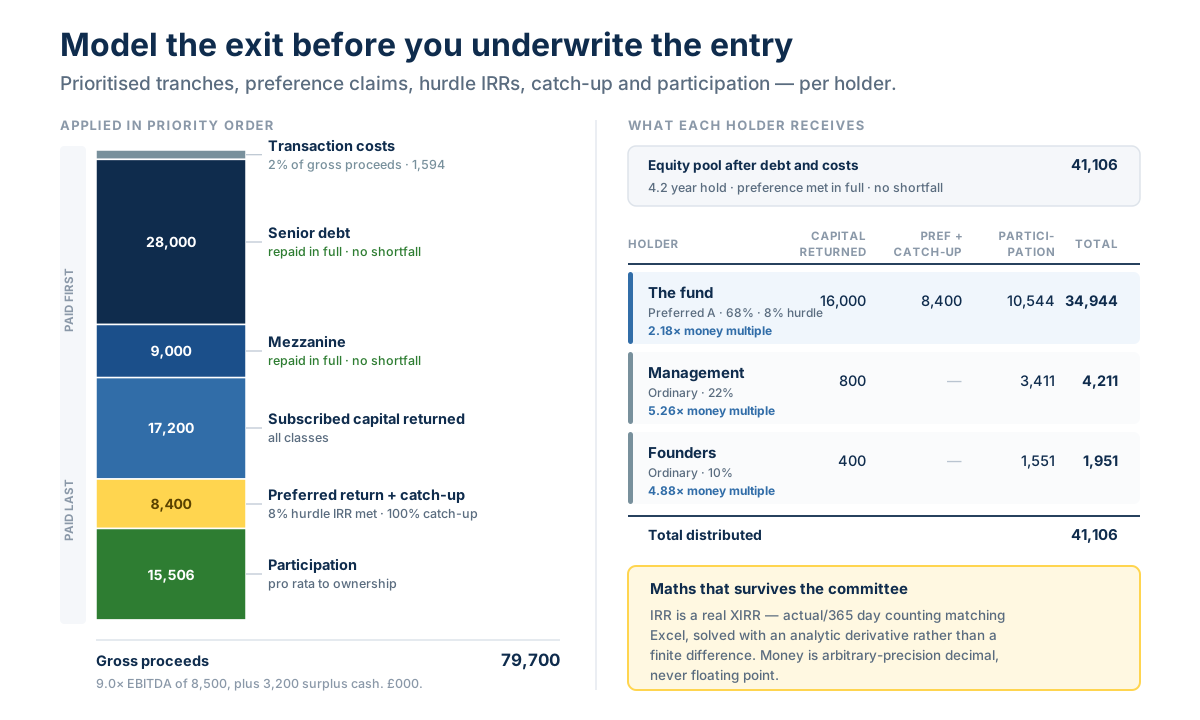
Excel-compatible XIRR, MOIC, TVPI, DPI, and a full exit waterfall with prefs and catch-up.
06Ready for the meeting
14 reports in 8 packs, to PDF or Word, with your logo on the cover.
07Lender or sponsor
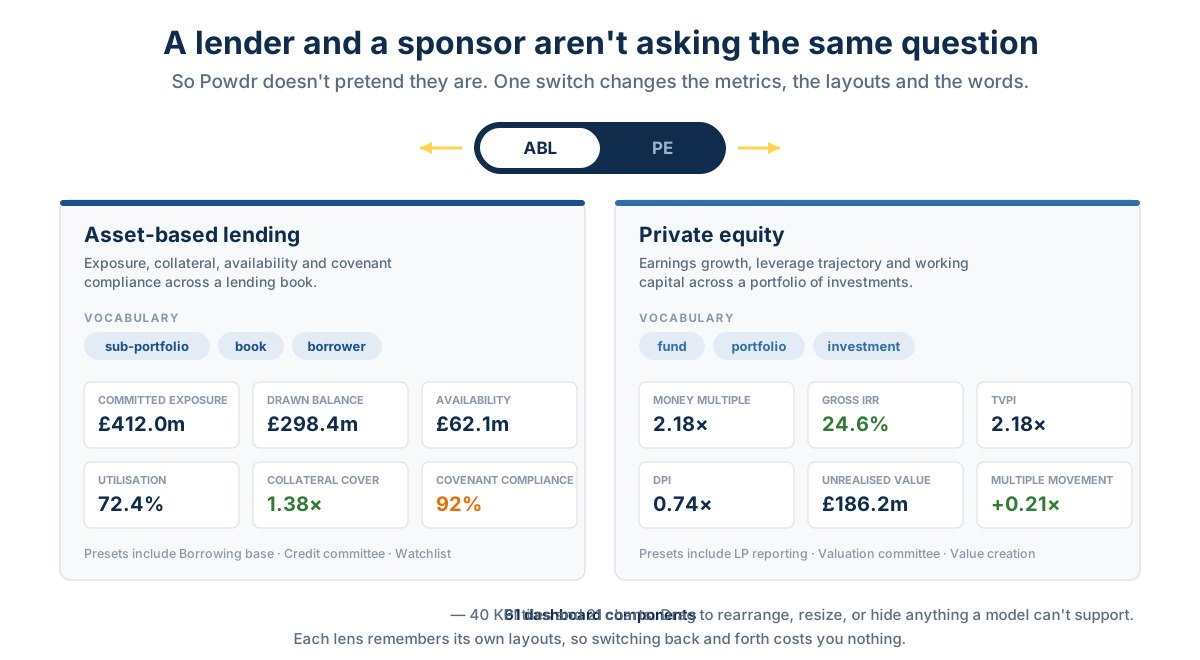
One switch changes the metrics, the layouts and the vocabulary.
08Shock the book in minutes
Move revenue and cost, see EBITDA, margin and leverage move across every model.
09No re-keying
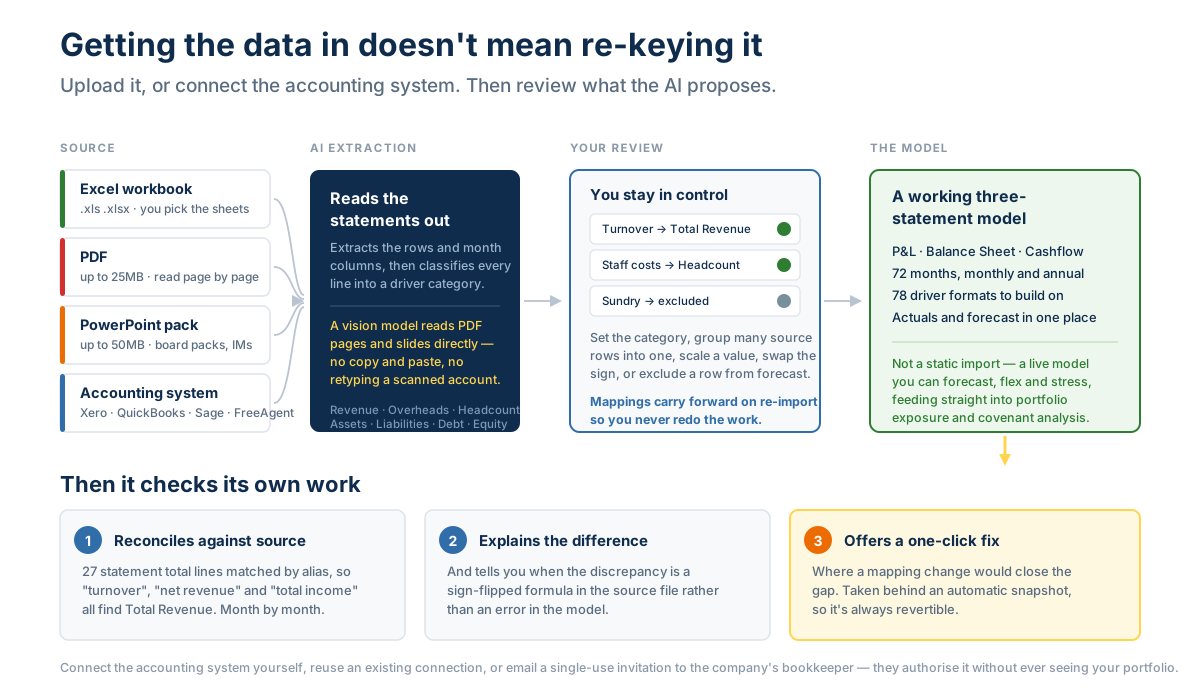
AI reads your spreadsheets, PDFs and decks — or connect the accounting system directly.
10Built to be audited
A balance sheet that checks itself, read-only seats, and ~90 types of audit event.
You see the breach before it happens
Forward-looking covenant monitoring, not backward-looking certificates.
Powdr tests every covenant against every month of the forecast, not just the last reported quarter. A covenant that passes today but fails in four months’ time isn’t marked compliant — it’s marked watch, and Powdr names the month it breaks. Headroom is calculated as slack against the limit and knows which way each test cuts, so a leverage covenant and a minimum-cash covenant are both measured correctly.
The whole book, in one place, worst case first
Compliance rolls up from covenant to model to sub-portfolio to book.
Every covenant resolves to one of four states — breach, watch, compliant, or no data — and Powdr propagates the worst case upward. One breach in one subsidiary turns the book red. Nothing is averaged away, and “no data” is excluded from the denominator rather than quietly counted as a pass, so a green book means green and not merely unmeasured.
Book-level figures are struck at each model’s own latest actual month rather than one common reporting date, and Powdr tells you which month each one is.
Every number shows its working
Click any figure and Powdr tells you where it came from.
Each metric carries its own provenance: which model rows it reads, where to find them in the model, the arithmetic in plain business language, which month it’s struck at, and why a correct figure might differ from the same sum done by hand. The internal risk grade works the same way — it’s a transparent 1-to-10 scorecard that returns the list of reasons it notched a borrower up or down.
And when a model genuinely can’t support a figure, the tile says why instead of printing a zero.
Asset-based lending modelled the way you actually lend
Borrowing base, advance rates, ineligibles, reserves and over-advance — computed from the model’s own balance sheet.
Powdr rebuilds availability from live receivables and inventory: gross collateral, less your ineligibles, times your advance rates, less dilution and priority payable reserves — then caps it at the facility and tells you whether it’s the collateral or the limit that’s binding. Below zero is an over-advance and it’s flagged as one. Net orderly liquidation value feeds a recovery view.
Sponsor returns maths that survives the valuation committee
IRR, MOIC, TVPI and DPI on every stake — plus a full exit waterfall.
Powdr’s IRR is a real XIRR: actual/365 day counting matching Excel, solved by bisection and Newton-Raphson with an analytic derivative, because a finite-difference approach loses too many significant digits on flows of tens of millions. Throughout the returns and valuation engine, money is held in arbitrary-precision decimal arithmetic rather than floating point.
The waterfall models prioritised debt tranches, transaction costs, preference claims, hurdle IRRs, catch-up and participation, and reports each holder’s capital returned and money multiple — plus any preference shortfall.
The waterfall runs a company at a time. It is the fund-level aggregation of IRR, MOIC, TVPI and DPI that spans the whole portfolio.
Reports that are ready for the meeting, not just the export folder
Fourteen reports, assembled into eight packs, out to PDF or Word with your branding on the cover.
A portfolio manager rarely wants one report — they want the set that goes to a particular meeting. So Powdr ships the sets: Credit Committee Pack, Field Examination Preparation, Portfolio Risk Monitoring, Full Book Review, LP Quarterly, Valuation Committee, Portfolio Review and Full Portfolio Review. Generated commentary is editable in-app, and the assumption levers behind each report are adjustable and printed alongside the numbers.
docx format — not an HTML file with a .doc extension — with real pagination, row-level breaks for long borrower tables and running footers.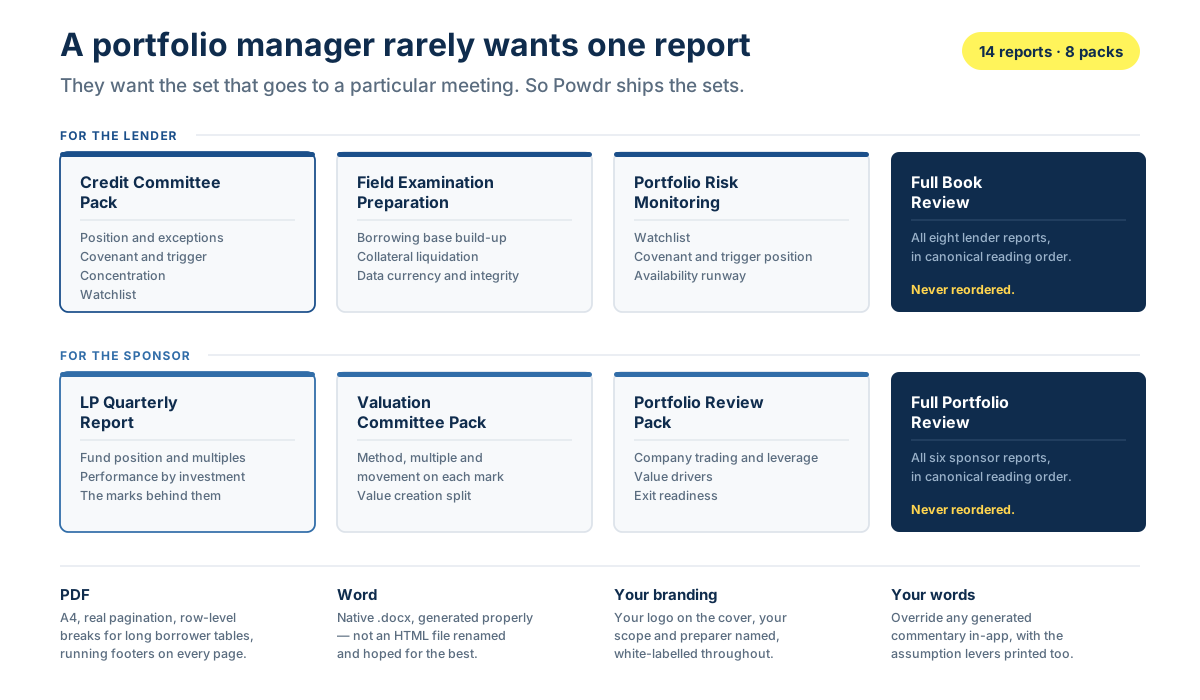
One platform that speaks lender or sponsor
A switch in the header changes the metrics, the layouts and the vocabulary.
A lender and a sponsor are not asking the same question, so Powdr doesn’t pretend they are. In lending mode a collection of companies is a sub-portfolio and the whole thing is a book; in private equity mode the same collection is a fund and the whole thing is a portfolio. Each mode keeps its own dashboard layouts, so switching back and forth costs nothing.
Shock the whole book in a couple of minutes
Move revenue and costs, watch EBITDA, margin and leverage move across every model at once.
Pick a shock — down 15, 10 or 5 per cent, or up — choose whether costs hold with margin or stay fixed, and Powdr re-runs the forecast months of every model in the portfolio. Critically, it re-runs the product’s own P&L engine on both the baseline and the shocked side, so any difference between stored and recomputed figures cancels out and what you’re left with is the effect of the shock alone.
This is an earnings sensitivity, not a stress test. Facilities and the balance sheet are held at modelled levels, so leverage moves because EBITDA moves.
Getting the data in doesn’t mean re-keying it
Upload it, or connect the accounting system — then let AI do the mapping and check its own work.
Send Powdr a spreadsheet, a PDF or even a PowerPoint pack and it reads the financial statements out of it, classifies every line into a driver category, and proposes the mapping for you to review. Or connect Xero, QuickBooks Online, Sage or FreeAgent directly — yourself, by reusing an existing connection, or by emailing a single-use invitation to the company’s bookkeeper and letting them authorise it without ever seeing your portfolio.
Then Powdr checks itself. It reconciles its own model against the source document line by line and month by month, explains each difference, and where a mapping change would close the gap, offers it as a one-click fix behind an automatic snapshot. It will even tell you when the discrepancy is a broken formula in the source file rather than an error in the model.
Accounting refreshes are triggered when you ask for them, which is why the data freshness view exists.
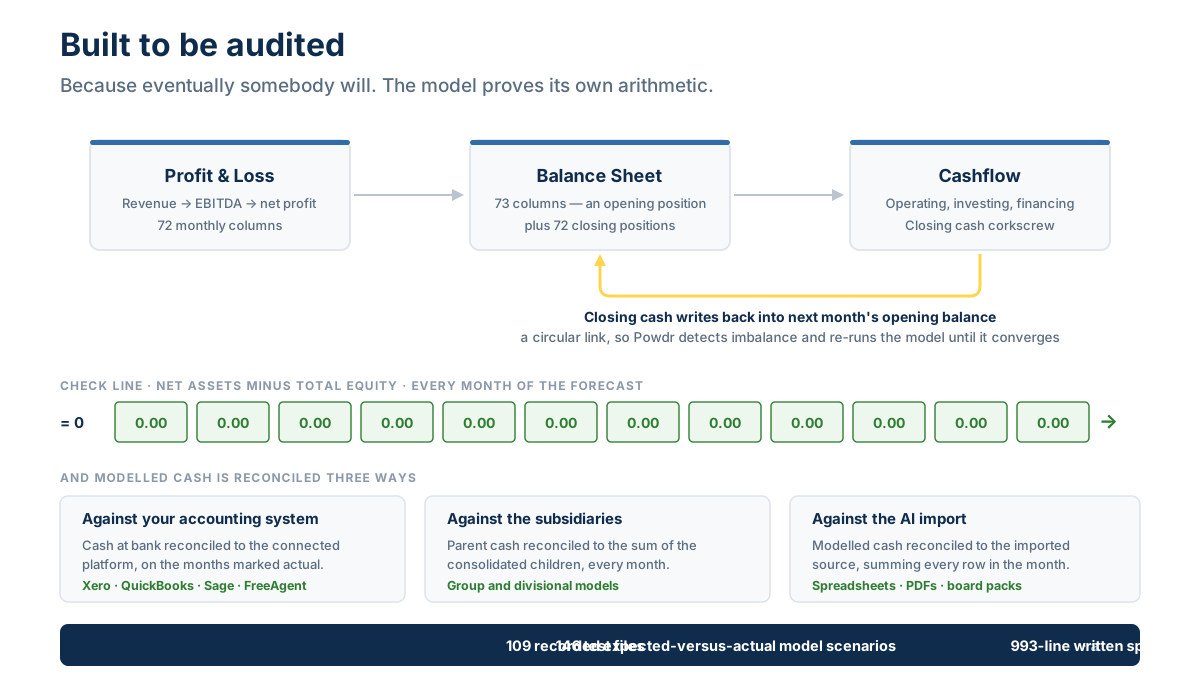
Built to be audited
Because eventually somebody will.
The model proves its own arithmetic. A dedicated check line tests net assets against total equity across the forecast horizon, and separate reconciliation lines prove modelled cash agrees with the connected accounting platform, the consolidated subsidiaries, and the AI-imported source. Cash is a circular reference, so Powdr detects imbalance and re-runs the model until it converges rather than presenting a balance sheet that does not balance.
Around it sits the governance an institution needs: four roles from full admin to genuinely read-only — enforced right down to the individual cell — company-level data isolation, per-model access grants, and around ninety types of audit event recording who changed what and when, from a single data entry to an actualisation to a snapshot restore.
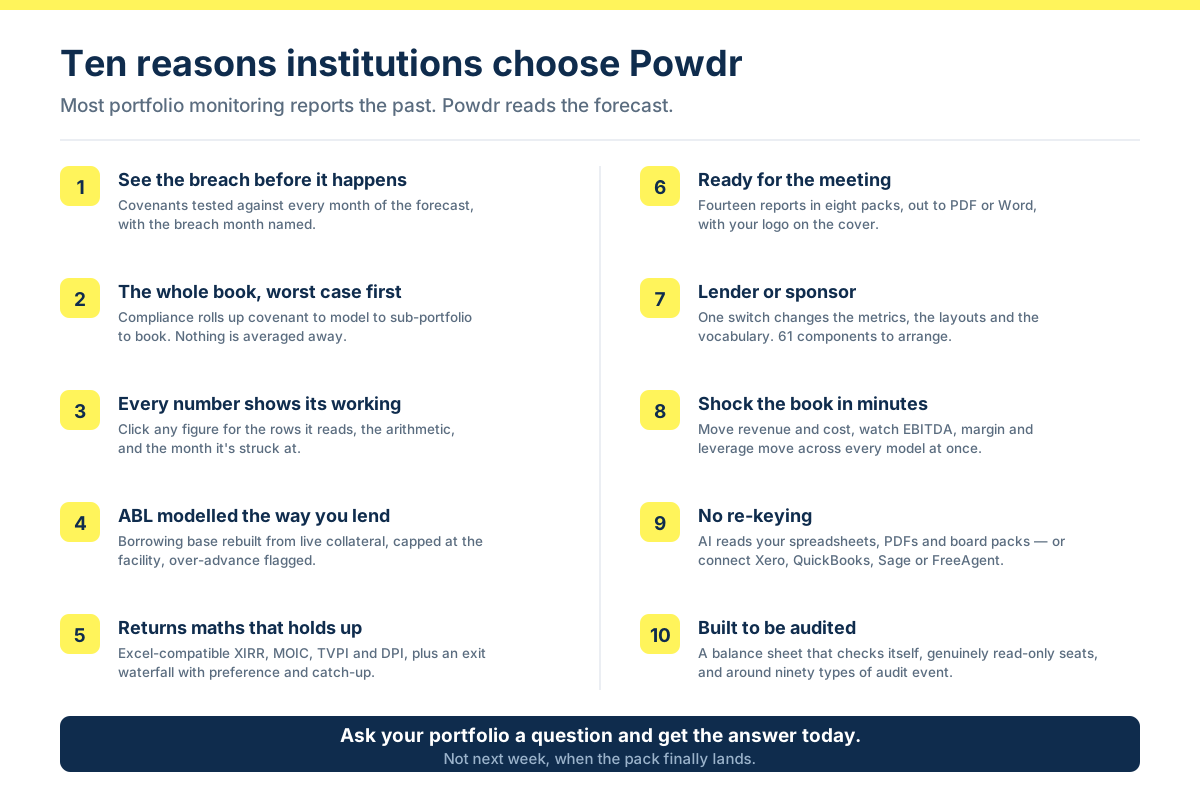
Something to take into the meeting
The same ten reasons as a single-page summary, and as a PDF you can forward to a colleague or print for a credit paper.
Powdr Group is trusted by major banks, investors and advisers

















Ask your portfolio a question and get the answer today
Not next week, when the pack finally lands. We will set up a managed trial with your own models in it, so you are judging Powdr on your book rather than on a demo dataset.
- Free of charge — the trial and the onboarding that goes with it
- Managed by us — we engage your portfolio companies and connect them
- Judged on your terms — measured against success criteria you set on day one